
RFT #1 • PERMANENT RECORD
Spire Over the Seine
Paris, France • Original Ilford FP4 Plus 35mm Negative
The photographic master that became the first Real Fungible Token.
THE PHYSICAL MASTER
The Photograph Begins Here
Spire Over the Seine
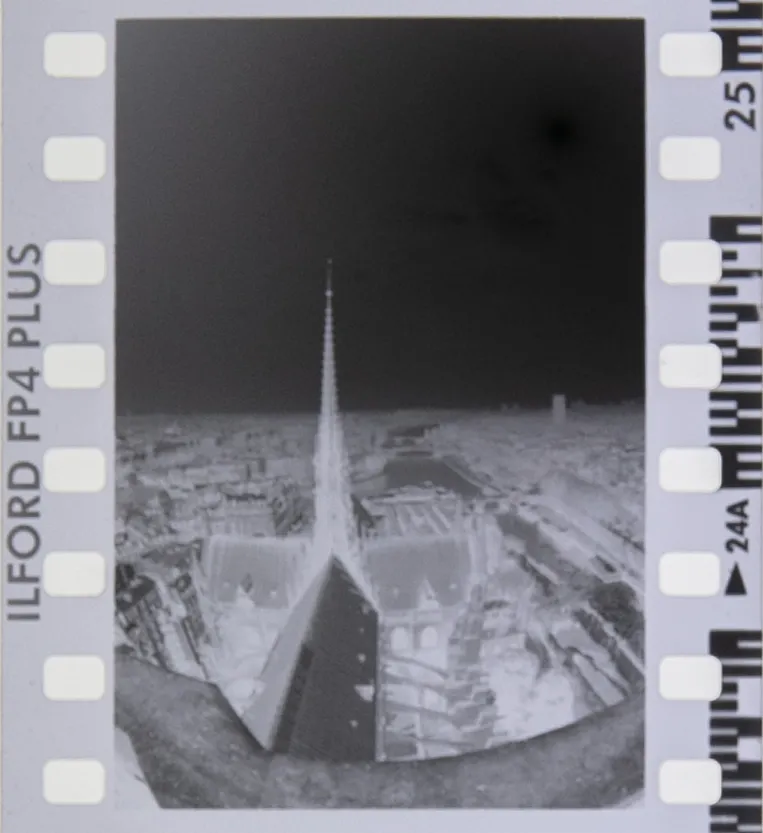
Original Ilford FP4 Plus 35mm Negative
Original negative identified • Documented • Archived
THE PHOTOGRAPH
Spire Over the Seine
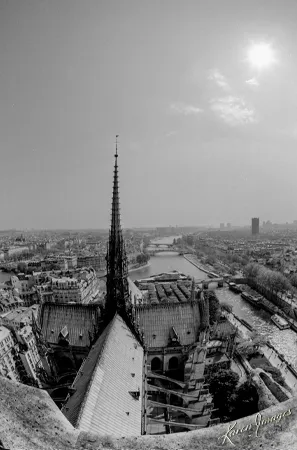
The finished photograph originates from the physical negative documented above. Prints, scans, publications, and other authorized uses may carry the image into different forms, but the original negative remains the singular photographic master at the center of RFT #1.
TWO HISTORIES CONVERGE
The Idea Began With the Spire
The story that would eventually lead to RFT #1 began with two experiences separated by thirteen years.
In 2002, we photographed Notre-Dame and created Spire Over the Seine.
In 2015, while producing La Culture du Vin, we traveled to Guédelon and documented craftspeople preserving building knowledge that had survived from the Middle Ages.
At the time, those experiences had nothing to do with one another.
After the fire at Notre-Dame in 2019, they became unexpectedly connected.
THE CONNECTION
La Culture du Vin at Guédelon
In the spring of 2015, La Culture du Vin brought us to Guédelon, where we documented craftspeople preserving and practicing medieval building methods using the materials, tools, and knowledge of an earlier age.
We could not have known then that this experience would one day intersect with a photograph we had made in Paris thirteen years earlier.
PROVENANCE & HISTORY
The Record of RFT #1
The provenance of RFT #1 begins with the creation and preservation of the physical photographic master.
01. CREATION
Spire Over the Seine was photographed in Paris, France on April 2, 2002, on Ilford FP4 Plus 35mm black-and-white film. The original camera negative documented above is the physical photographic master from which the finished image originates.
02. ARCHIVE
Following processing, the original negative remained in the Karen Images photographic archive. The physical master has been retained as the original source object associated with Spire Over the Seine.
PARIS • APRIL 2002
A City Welcomed Us to Photograph
Spire Over the Seine was created on April 2, 2002, during a remarkable moment in Paris.
The September 11 attacks had occurred only months earlier, and international tourism had been profoundly disrupted. During our visit, Paris felt unusually open. Shopkeepers sometimes came into the street and spoke to us in English. The Louvre, normally surrounded by crowds and lines, could be entered with virtually no wait.
For photographers, the circumstances were extraordinary. Places that normally required patience and careful timing opened before us with remarkably few people in the frame. We were able to photograph the Louvre pyramid, the cathedral, and the city around us in our own style without constantly waiting for scenes to clear.
That unusual quiet became part of the photographic circumstances in which Spire Over the Seine was created.
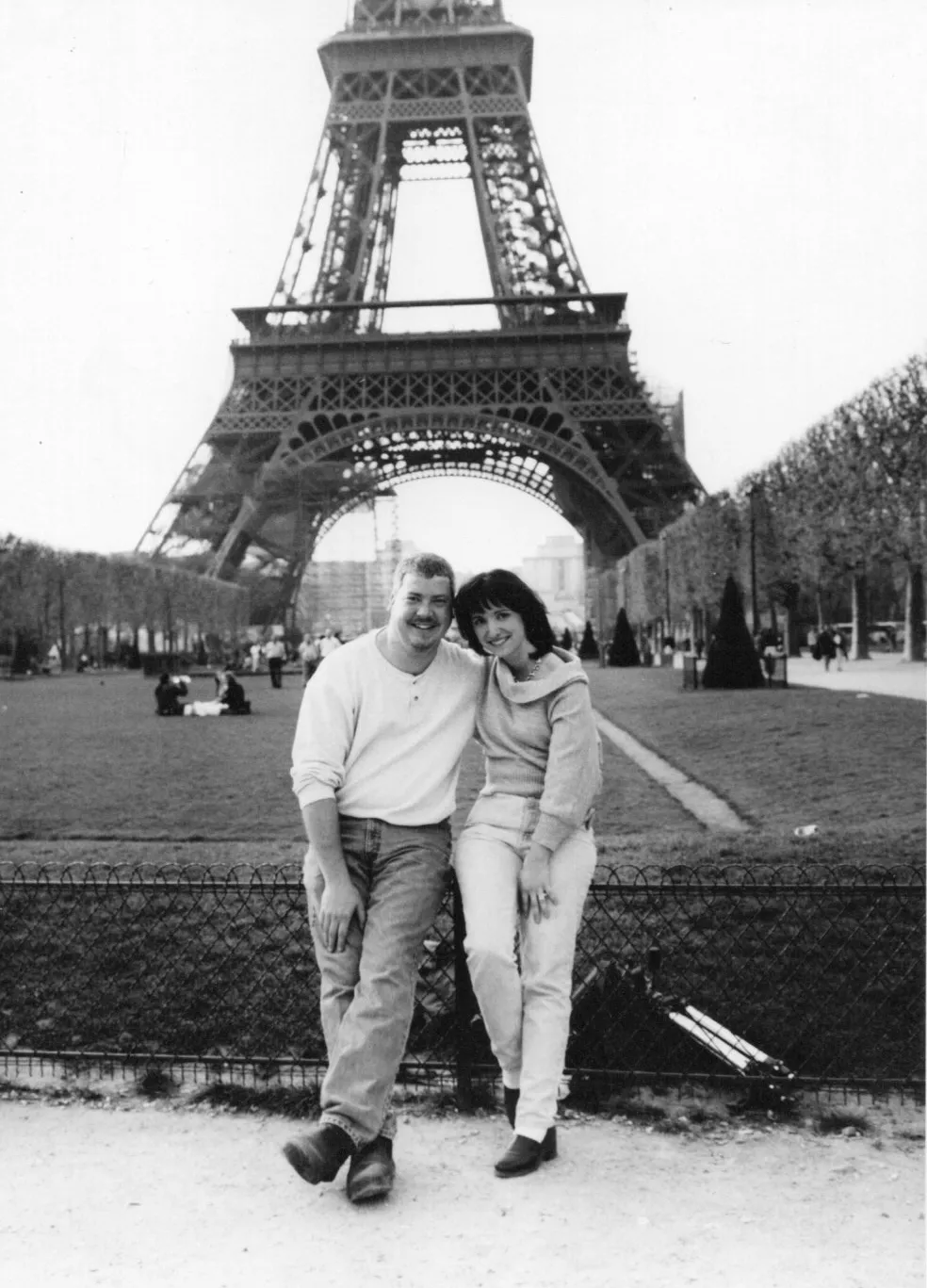
Troy and Karen Burns in Paris, April 2002. Photographed by a Paris resident using their Mamiya 645.
"We handed a man we never met our Mamiya and trusted him to make this photograph when he offered.
Because of that small act of trust, this moment from the journey survives with the work".
MONTMARTRE • APRIL 2002
An Image That Came Home With Us
While photographing Paris, we came across the entrance to Abbesses Métro station in Montmartre, the neighborhood that had been home to generations of artists.
The Art Nouveau entrance and its distinctive MÉTROPOLITAIN sign became another photograph from this journey that stayed with us.
Years later, the image helped inspire the identity of Metro Productions. The form of the Métropolitain sign became part of the company's visual language, while the initials KI were incorporated at the top of the Metro Productions logo to represent Karen Images.
What began as a photograph made in Montmartre became part of the identity of the creative businesses we continued to build together.
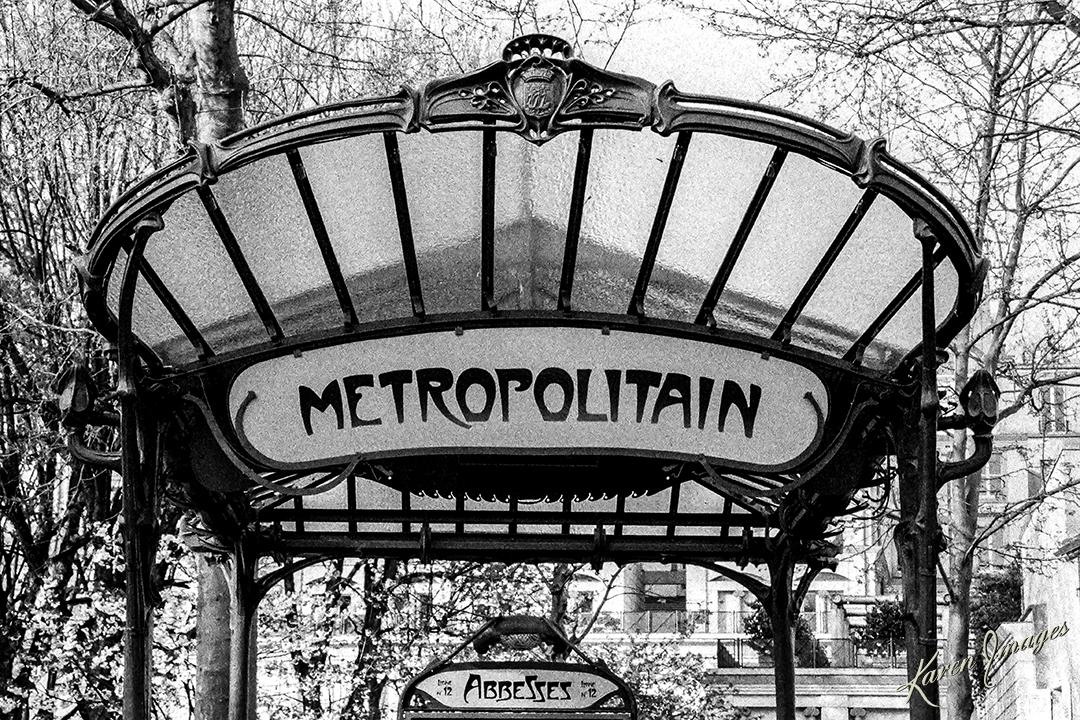
Abbesses Métro station, Montmartre, Paris • April 2002
The photograph that later helped inspire the Metro Productions identity.
FROM GALLERY WALLS TO FILM SETS
The Photograph Found Another Life
For years, photographs created during travels throughout the United States and abroad became part of the Karen Images fine-art collection, with the Paris photographs becoming some of the most popular work in the portfolio.
Eventually, Karen Images stopped selling the artwork and retained the collection. That decision gave the work another life.
Through a partnership with an Atlanta prop house, photographs from the Karen Images collection began being rented for use in film and television productions, including Sully, The Mule, and Donald Glover's Atlanta.
Among them was Spire Over the Seine.
TELEVISION PROVENANCE
Spire Over the Seine Appears in Atlanta
Among the works selected from the Karen Images collection was Spire Over the Seine.
An 18 × 22 silver-gelatin print made by Karen in her darkroom in 2003 was later rented for use in Donald Glover's Atlanta on FX.
The physical print appeared on screen and was returned to Karen Images after the production. It remains preserved as the framed gallery piece that was rented to the production.
That surviving print connects the original photographic negative to another documented chapter in the life of Spire Over the Seine, years before the photograph became RFT #1.
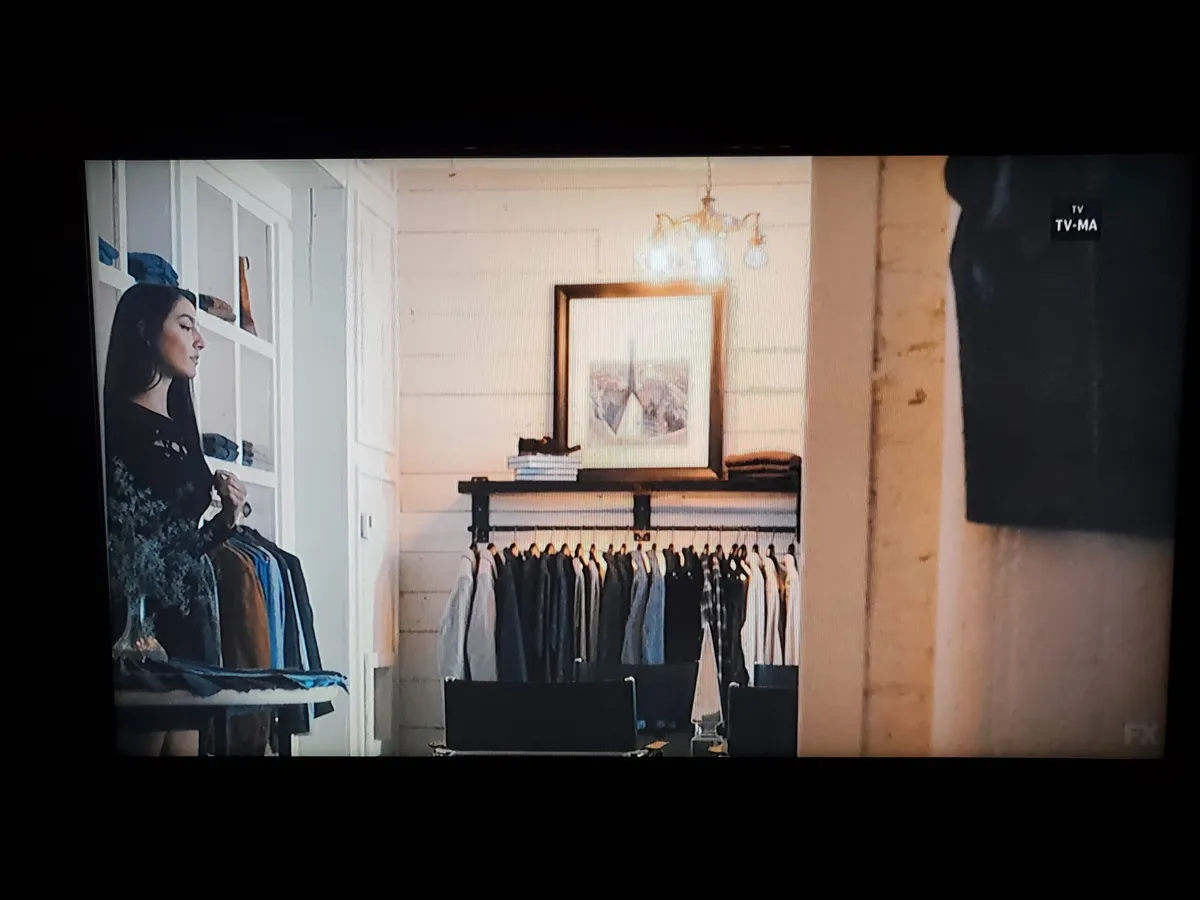
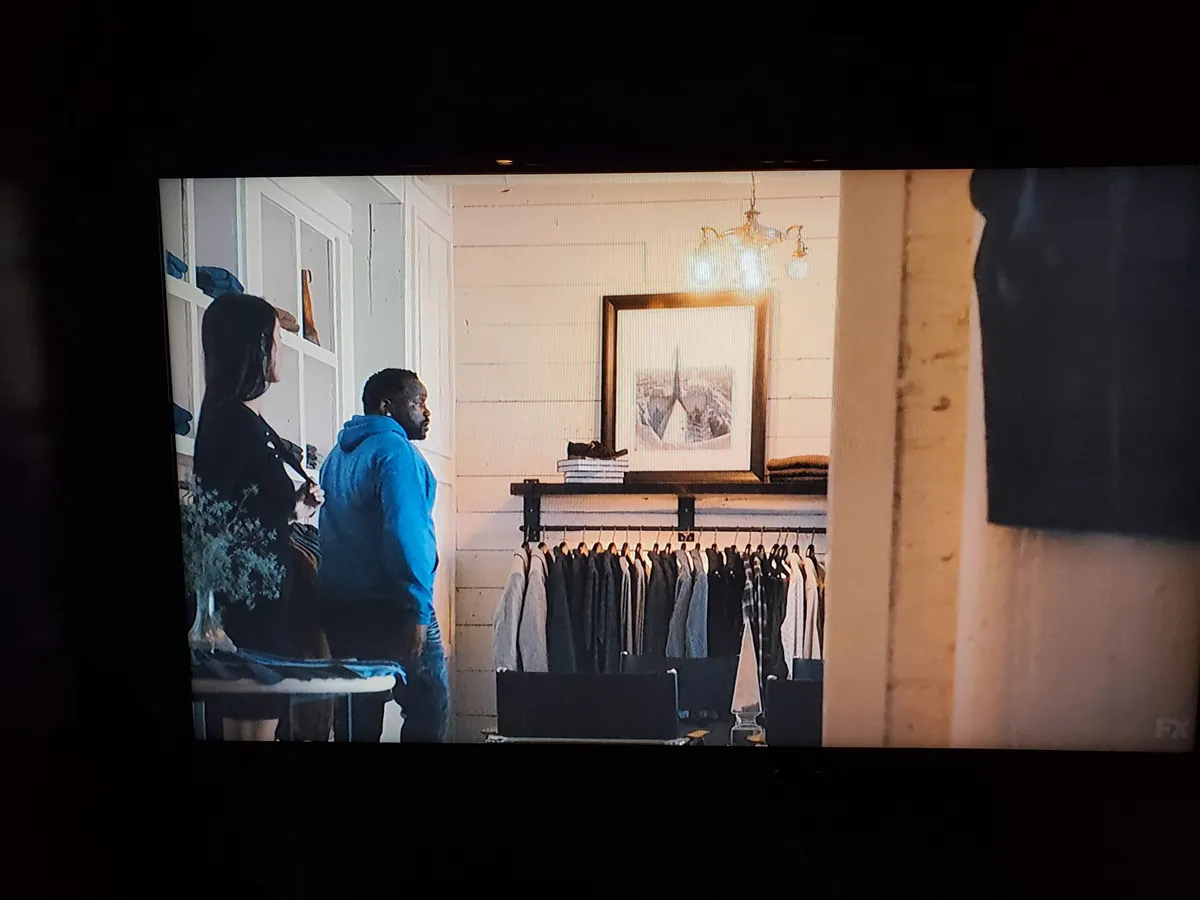
Spire Over the Seine appearing on screen in Donald Glover's Atlanta on FX. Season 2, Episode 8, “Woods” • 6:29
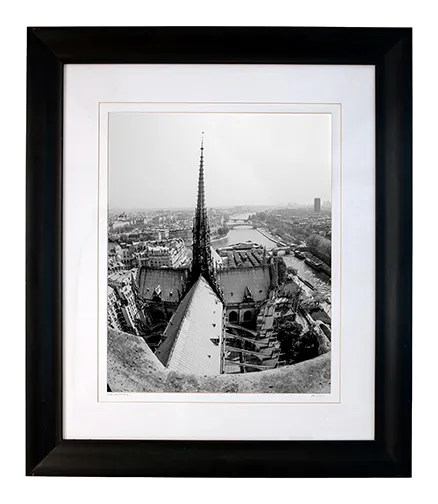
The 18 × 22 silver-gelatin print of Spire Over the Seine, made by Karen in her darkroom in 2003. The framed gallery piece was rented to the production and remains preserved in its original presentation today.
APRIL 2019 • NOTRE-DAME
Then the Spire Was Gone
Seventeen years after Spire Over the Seine was photographed, fire devastated Notre-Dame Cathedral.
The spire preserved in the photograph was gone.
For a photograph that had already traveled from negative to gallery wall to television screen, the event changed the meaning of what had been preserved.
2019–2022 • THE CONNECTION
The Knowledge Was Not Lost
After the fire, the challenge of rebuilding Notre-Dame raised questions about whether the knowledge required to reconstruct its medieval timber framework still existed.
For us, that question carried a personal connection.
Four years earlier, we had stood at Guédelon and documented craftspeople preserving and practicing medieval building methods.
As the reconstruction developed, traditional craftsmanship became central to recovering what had been lost. Skills that had survived for centuries were relevant again.
Then, in January 2022, National Geographic documented the extraordinary reconstruction of Notre-Dame and the return to historic materials and traditional building methods.
Two completely separate chapters of our history had suddenly intersected.
We had photographed the spire.
Years later, we had documented people devoted to preserving the building knowledge of the period in which Notre-Dame had been created.
THE FIRST RFT
Could the Photograph Give Something Back?
The connection led to a different question.
Could the original photographic negative be used to help restore the very spire it had preserved?
That question became the beginning of the Real Fungible Token.
We approached Friends of Notre-Dame de Paris with the idea that proceeds from RFT #1 could contribute to the restoration of the cathedral.
At the same time, we explored whether an existing relationship with Porsche Cars North America might help the project reach the kind of collector capable of making that contribution meaningful.
Spire Over the Seine became RFT #1.
FEBRUARY 2022
The Purpose Changed
The Notre-Dame effort reached its end at almost exactly the moment the world changed again.
Friends of Notre-Dame de Paris decided not to move forward with the proposal as Russia began its invasion of Ukraine.
For us, the question was immediate. How could we continue devoting our effort to raising money for the restoration of a spire while people were fleeing their homes and dying in a war?
We couldn't.
The idea behind the Real Fungible Token did not end. Its immediate purpose changed.
We returned to the Karen Images archive and selected another photograph. Exodus became RFT #2, redirecting the effort toward helping people displaced by the invasion of Ukraine.
Several days later, Porsche Cars North America also informed us that it would not pursue the RFT #1 proposal further.
Spire Over the Seine remained RFT #1.
Its original purpose was never replaced. It simply had to wait.
CURRENT STATUS
RFT #1 Still Waits
More than two decades after the photograph was created, the original negative of Spire Over the Seine remains in the Karen Images archive.
RFT #1 has never been transferred to a collector.
The purpose that led to its creation also remains part of its history. It began with the idea that ownership of an original photographic master could do more than preserve an object. It could carry forward the story, significance, and productive potential of the work while accomplishing something meaningful through its transfer.
The events of February 2022 interrupted the original effort. They did not erase it.
Spire Over the Seine remains the first Real Fungible Token, awaiting the collector who will become the next chapter in its record.
THE TRANSFER
The Master. The Print. The Rights. The Record.
The transfer of RFT #1 is more than the sale of a photographic negative.
The collector receives the original physical master, the Ilford FP4 Plus 35mm negative from which Spire Over the Seine was created, together with the existing framed print created by Karen Burns in her darkroom that appeared in Donald Glover's Atlanta, and the economic rights defined by the RFT transfer agreement.
The framed photograph is itself part of the documented history of the work. Created in Karen's darkroom from the original negative, it is the same physical print that later appeared on screen in Donald Glover's Atlanta on FX.
The rights include the exclusive right to receive revenue from future authorized reproduction and licensing of the photograph.
Karen Images remains the recognized creator of the work and may continue to display the image as part of its portfolio, history, and documentation of the RFT Archive. After transfer, Karen Images does not participate in reproduction or licensing revenue except as specifically provided by the transfer agreement.
The RFT also carries a continuing resale structure. On qualifying future transfers, a contractual royalty is paid to Karen Images or its assigns by the new collector for the duration provided by the agreement.
The negative is the master.
The framed photograph carries its history.
The provenance continues.
THE PRESENT RECORD
Current Record
PHOTOGRAPHIC MASTER
Original Ilford FP4 Plus 35mm Negative
CREATED
Paris, France • April 2, 2002
CURRENT CUSTODY
Karen Images
TRANSFER HISTORY
No collector transfer recorded
The original photographic master and its continuing provenance remain preserved as part of the permanent record of RFT #1.
© 2026 Real Fungible Token. Built by Karen Images